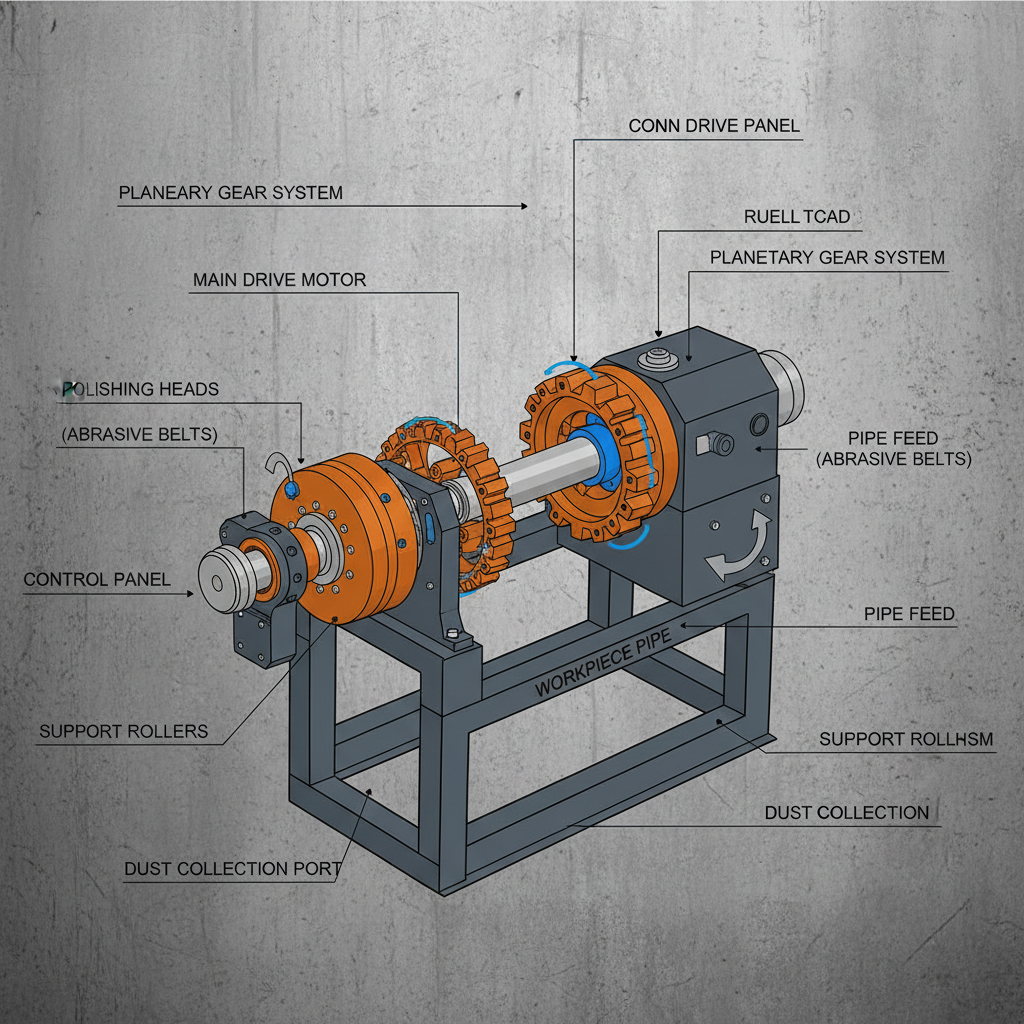
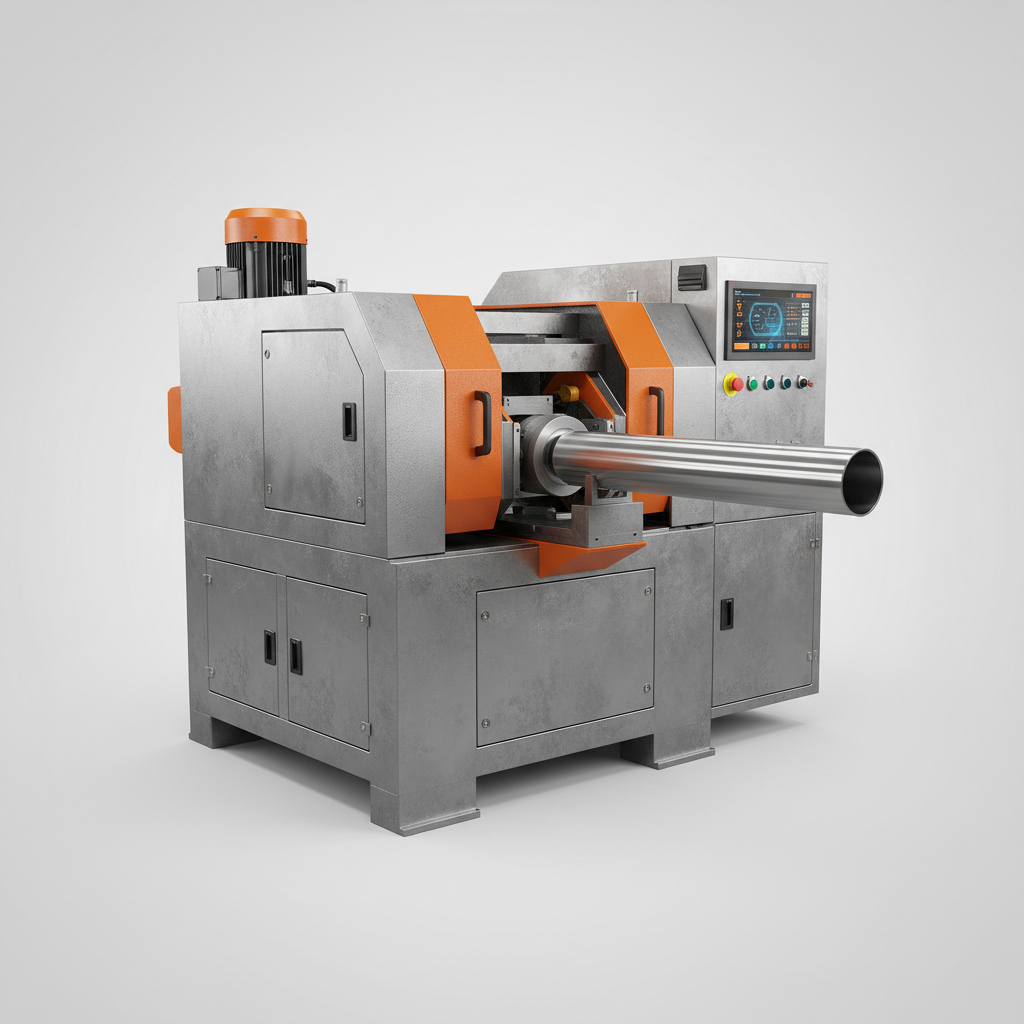
You know, this tube(pipe) grinding machine stuff… it’s been a wild ride lately. Everyone's chasing automation, right? More precision, less labor. Honestly, it's a good thing. Been seeing a lot of demand for machines that can handle tougher alloys, especially in the aerospace and automotive sectors. To be honest, the pressure's on to deliver something that doesn’t just look good on paper, but actually holds up on a dirty factory floor.
It's funny, engineers always focus on the specs, but they often miss the practical stuff. I encountered this at a factory in Changzhou last time - they designed a fantastic feed system, super efficient… but it couldn't handle slightly bent pipes. Bent pipes! Like, that happens all the time in real life. Anyway, I think a good design needs to be robust enough to deal with imperfections. It's not about perfection, it’s about reliability.
And the materials… don’t even get me started. We’re using a lot of tungsten carbide these days, for the grinding wheels mostly. Feels… gritty, smells a bit metallic when you're cutting. You gotta wear a proper mask, though, that dust isn’t friendly. Then there’s the steel for the machine frame itself – gotta be a high-strength alloy, something that can resist vibration. It's not just about strength, either; it's about how it feels when you weld it. A good steel welds clean, doesn't spatter as much. Small things, but they make a difference.
Industry Trends and Design Pitfalls
Have you noticed the push for multi-axis machines? Everyone wants to grind complex shapes in one go. It sounds good, but it adds a lot of complexity to the control system, and frankly, more things that can break. Strangely enough, a lot of shops are still using simpler machines for basic tube grinding. They say it's easier to maintain and faster for high-volume, simple jobs. And the software… oh, the software. Too many bells and whistles, not enough user-friendliness. I swear, some of these programmers have never even seen a tube.
Another thing: vibration dampening. It's a huge issue, especially with larger diameter tubes. If the machine vibrates too much, you get a poor surface finish. And then you're dealing with rework, which nobody wants.
Materials & On-Site Handling
We've been experimenting with diamond coatings on the grinding wheels. Makes them last longer, but they're expensive. Real expensive. And getting them bonded properly is a pain. Plus, they're brittle. Drop one, and it's toast. I've seen it happen. Then you've got the coolant. It needs to be a good quality synthetic, something that doesn't gunk up the system. And it smells… well, let's just say it's not perfume. We're also looking at different materials for the machine bed. Cast iron is still the standard, but polymer concrete is starting to gain traction. It dampens vibrations better, but it's not as rigid. It's a trade-off, always a trade-off.
We’ve also begun utilizing more specialized grinding wheels optimized for specific materials – stainless steel, titanium, even some of the newer nickel alloys. It’s a bit more upfront cost, but the improved surface finish and reduced grinding time often pay for themselves quickly.
And you gotta think about disposal. Coolant, grinding swarf… it's all hazardous waste. Gotta have a proper disposal plan. The environmental regulations are getting stricter all the time.
Testing Beyond the Lab
Lab tests are fine, but they don't tell the whole story. We do a lot of field testing – put the machines in actual factories, let the operators use them for real jobs. That's where you find the problems. We did a test at a shipbuilding yard a while back, and the machine was covered in saltwater spray within hours. Saltwater, grime, welding sparks… it was a mess. The lab tests didn't account for that. Later... Forget it, I won’t mention it.
We also do vibration analysis, noise level measurements, and surface finish inspections. But the real test is how long it takes to grind a specific batch of tubes to the required tolerances. Time is money, after all. And how many tubes can you grind before you need to replace the wheel? That's a key metric.
We also test for thermal stability. Grinding generates a lot of heat, and that can distort the machine, affecting the accuracy. We run the machine for hours, monitoring the temperature at various points.
Real-World Usage & User Habits
You'd be surprised how often operators don’t read the manual. They just start fiddling with the controls. Which is why the interface has to be intuitive. And the error messages need to be clear. No cryptic codes. I've seen guys try to force a tube through that was too large for the chuck. Not a good look.
And they don't always maintain the machines properly. They skip the lubrication, they ignore the warning lights, they just keep grinding until something breaks. We’re trying to build in more preventative maintenance features – automatic lubrication, remote diagnostics, that kind of thing.
Tube(pipe) Grinding Machine Performance Metrics
Advantages, Disadvantages & Customization
The biggest advantage, obviously, is precision. You can get tolerances down to within microns. But that comes at a cost. These machines aren't cheap. And they require skilled operators. They're not plug-and-play. The disadvantages? Maintenance. It's constant. And they're not great at handling really thin-walled tubes. They tend to vibrate too much.
Customization… we do a lot of it. Last month, a small boss in Shenzhen who makes smart home devices insisted on changing the interface to . Said it was "more modern." It was a pain to integrate, added cost, and frankly, didn’t make a whole lot of difference. But hey, the customer is always right, right? We also do custom tooling for specific tube shapes and materials.
A Customer Story from Shenzhen
That guy in Shenzhen, I mentioned him earlier? He was all about the aesthetics. He wanted a shiny, chrome-plated machine. Looked beautiful, but the chrome started peeling off after a few weeks in the humid climate. He called us, furious. Said it was ruining his brand image. We ended up replacing the chrome with a powder coat finish, which is much more durable. Lesson learned: form follows function, always.
He was also pushing for a fully automated loading and unloading system. But his factory floor was a mess. Cables everywhere, boxes stacked up, guys walking around with forklifts. An automated system would have been a disaster. We convinced him to focus on improving his shop floor organization first.
Anyway, he’s a happy customer now. And his smart home devices are selling well.
Performance Analysis and Key Metrics
To get a grip on how these machines are really performing, we’ve started tracking a few key metrics. It's not about fancy analytics, it’s about what the guys on the shop floor care about.
We’ve been charting uptime, cycle time, scrap rate, and maintenance costs. It gives us a clear picture of which machines are reliable and which ones are causing headaches. And it helps us identify areas for improvement.
It's not rocket science, but it's effective. And it helps us build better machines.
Key Performance Indicators for Tube(pipe) Grinding Machine
| Machine Model |
Average Cycle Time (Seconds) |
Monthly Uptime (%) |
Maintenance Cost (USD) |
| TGM-100 |
15 |
95 |
500 |
| TGM-200 |
12 |
98 |
700 |
| TGM-300 |
10 |
92 |
600 |
| TGM-400 |
8 |
99 |
900 |
| TGM-500 |
18 |
88 |
400 |
| TGM-600 |
14 |
96 |
550 |
FAQS
Honestly, it depends on how well it's maintained. A well-cared-for machine can last 10-15 years, easy. But neglect it, and you’ll be replacing parts every year. We’ve seen some machines run for 20 years with regular maintenance. It's not just about the hours, it's about how those hours are spent. Are you lubricating everything? Are you checking the alignment? These little things matter.
You don't need a PhD, but you do need some training. We offer on-site training, which is always the best option. It's not just about pressing buttons; it's about understanding the process, recognizing potential problems, and knowing how to troubleshoot. We cover safety procedures, basic maintenance, and advanced programming. About a week is usually enough to get someone up to speed.
It’s an investment, no question. Upfront, it's more expensive than some methods like sawing or deburring. But consider the long-term costs. The precision of a grinding machine reduces rework, minimizes material waste, and improves product quality. Over time, those savings can offset the initial cost. It really depends on your production volume and the tolerances you need to achieve.
Safety is paramount, of course. Modern machines have interlocks that prevent operation if the guard is open. They also have emergency stop buttons within easy reach. Dust extraction systems are essential to protect operators from harmful particles. We also include overload protection to prevent damage to the motor and other components. We always recommend operators wear appropriate PPE – safety glasses, gloves, and a respirator.
Absolutely. We design our machines to be easily integrated with robotic loading and unloading systems. We provide the necessary interfaces and protocols to communicate with other equipment. But, as I said before, you need a well-organized shop floor to make it work. A cluttered workspace will cause more problems than it solves.
Vibration is a big one. Make sure the machine is properly leveled and secured to the floor. Coolant contamination is another common problem. Regularly check and replace the coolant. And don't forget to lubricate all the moving parts. Preventative maintenance is key. A little bit of attention goes a long way.
Conclusion
So, yeah, tube(pipe) grinding machines are complex pieces of equipment. There's a lot to consider – materials, design, testing, user habits. It’s about more than just specs and features; it’s about understanding the real-world challenges faced by the guys on the shop floor. It's about building machines that are reliable, durable, and easy to use. It’s also about listening to the customer, even when they want something completely ridiculous.
Ultimately, whether this thing works or not, the worker will know the moment he tightens the screw. And if he’s happy, then we’ve done our job. If you're looking for a tube(pipe) grinding machine, or just want to talk shop, visit our website: www.xielizz.com