
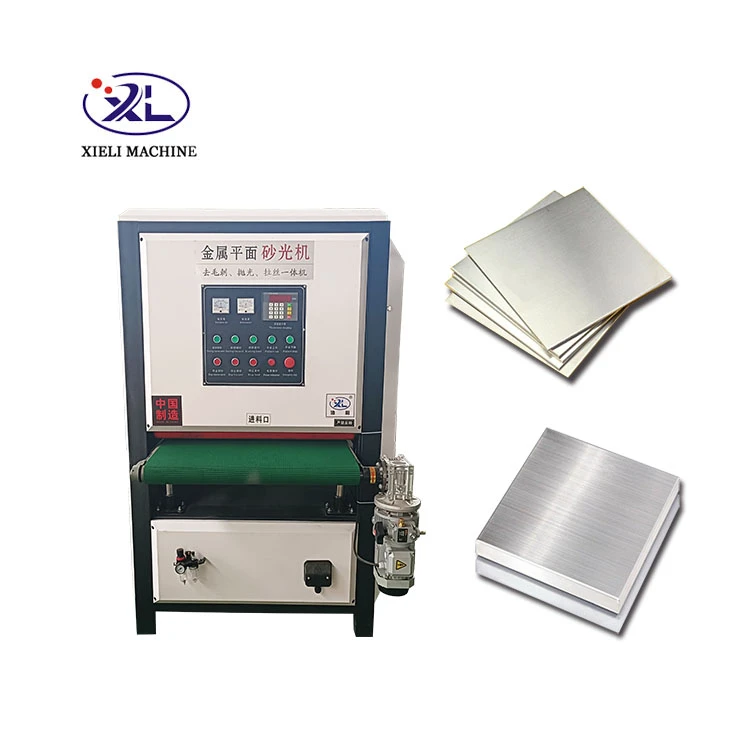
Centerless grinding represents a critical manufacturing process for achieving high-precision cylindrical finishes without the need for centers to support the workpiece. This technology is essential for mass-producing components like pins, shafts, and rollers where concentricity and tight tolerances are paramount. This article examines the technical architecture and procurement considerations for specialized grinding machinery tailored to industrial requirements.
For many manufacturers, the transition from manual to automated systems involves integrating customized cnc centerless grinder technology to reduce human error and increase throughput. In the context of general equipment manufacturing, the ability to maintain consistency across thousands of units depends heavily on the machine's rigidity, the precision of its CNC axis, and the quality of the abrasive interface.
Readers will gain insights into the technical variables that affect grinding performance, how to evaluate supplier capabilities based on equipment specifications, and the practical steps for selecting a machine that aligns with specific material hardness and dimensional requirements. By focusing on the synergy between software control and mechanical stability, businesses can optimize their production lifecycle.
Precision Grinding Fundamentals
The core mechanism of centerless grinding relies on the interaction between three primary elements: the grinding wheel, the regulating wheel, and the workpiece support. Unlike cylindrical grinding, where the part is held between two centers, this method uses the regulating wheel to rotate the workpiece and provide a controlled feed rate. This configuration allows for the processing of long, slender parts that would otherwise bend under their own weight or the pressure of the grinding wheel. The relative speed and angle between these two wheels dictate the surface finish and the final diameter. In high-precision environments, the stability of the machine bed—often constructed from cast iron to dampen vibrations—is the primary factor in preventing "chatter" marks on the finished surface, ensuring that the micro-geometry of the part remains within specification.
Optimizing Centerless Grinding Systems
Achieving industrial-grade precision requires a deep understanding of how mechanical variables interact with digital controls. The following analysis breaks down the essential dimensions of system optimization, from the electronic synchronization of wheels to the physical constraints of the workpiece.
CNC Control and Accuracy
CNC integration allows for precise adjustment of the regulating wheel's speed and the grinding wheel's position. This automation ensures that diameter corrections are made in real-time, reducing scrap rates. For enterprises like Xingtai Xieli Machinery Manufacturing Co., Ltd., providing equipment with robust motor frequencies is key to maintaining consistent torque across different processing widths.
| Control Factor | Technical Impact | Risk of Failure | Buyer Checkpoint |
|---|---|---|---|
| Feed Rate Sync | Determines longitudinal finish | Surface spiraling | Encoder resolution |
| Axis Rigidity | Maintains diameter consistency | Tapering/Ovality | Bed material grade |
| Motor Frequency | Controls wheel surface speed | Burn marks | VFD stability |
| Programmable Cycles | Enables batch repeatability | Setup time increase | UI flexibility |
| Automatic Dressing | Maintains wheel sharpness | Increased friction | Cycle automation |
| Feedback Loops | Real-time dimension correction | Over-grinding | Sensor response time |
Abrasive Material Selection
The choice of grinding wheel material—whether aluminum oxide, silicon carbide, or cubic boron nitride (CBN)—must match the hardness of the workpiece. A mismatch leads to premature wheel wear or thermal damage to the part. In high-volume production, the bond type (vitrified vs. resin) determines the wheel's longevity and the frequency of dressing required to expose new, sharp grains.
Workpiece Support Dynamics
Proper support is critical for preventing deflection in slender parts. The work-rest blade must be perfectly aligned with the axis of rotation. Any misalignment introduces eccentricity, leading to a non-cylindrical result. High-end systems utilize adjustable support mechanisms to accommodate varying lengths and diameters, ensuring the part remains stable throughout the grinding cycle.
Coolant and Thermal Management
Grinding generates intense localized heat. Without effective coolant delivery, the workpiece can suffer from thermal expansion, leading to dimensional inaccuracies or "grinding burn." Systems must be evaluated based on their coolant flow rate and the ability to direct fluid exactly at the grinding point to flush away swarf and stabilize temperature.
Surface Finish Requirements
The Ra (Roughness Average) value is determined by the grit size of the wheel and the spark-out time. For mirror-like finishes, a multi-stage process is often used, moving from a coarse wheel for material removal to a fine wheel for polishing. This is particularly relevant for components used in hydraulic systems where seal integrity is critical.
Dimensional Tolerance Control
Maintaining tolerances within microns requires a machine that can compensate for environmental temperature shifts. Precision centerless grinders utilize high-resolution linear scales and temperature-compensated bearings to ensure that the gap between the wheels remains constant, preventing the diameter from drifting during long production runs.
Customization for Specific Geometries
While standard machines handle cylinders, customization is necessary for tapered or stepped parts. This involves modifying the regulating wheel angle and the work-rest blade geometry. Specialized manufacturers design equipment that can handle different shapes—such as square or hexagonal polishing—by adapting the contact points and the rotation logic of the machine.
FAQ
What is the primary advantage of centerless grinding over cylindrical grinding?
The primary advantage is the elimination of centers, which allows for significantly higher production speeds and the ability to process parts that cannot be centered. It is ideal for high-volume manufacturing of small to medium diameter pins and shafts, as it reduces setup time and prevents the deformation of slender workpieces.
How does the regulating wheel affect the final product quality?
The regulating wheel controls the rotation and the longitudinal feed of the workpiece. If the speed ratio between the grinding wheel and regulating wheel is incorrect, it can cause uneven surface textures or "chatter." Proper alignment and speed synchronization are essential for achieving the desired concentricity and surface finish.
What should I look for when selecting a grinding machine supplier?
Buyers should evaluate the supplier's ability to provide technical specifications that match their material needs (e.g., motor power, processing width). It is also important to check if the supplier offers customization for specific geometries and has a proven track record in the machinery manufacturing town or industrial zone where they operate.
Can a customized cnc centerless grinder handle different materials?
Yes, provided that the correct abrasive wheels are used. The machine provides the mechanical platform and control, but the wheel material (e.g., CBN for hardened steel, Alumina for softer metals) must be selected based on the workpiece's metallurgical properties to avoid thermal damage or excessive wear.
How do I prevent "burning" during the grinding process?
Burning is caused by excessive friction and heat. To prevent this, ensure that the coolant system is operating at full capacity and directed precisely at the contact point. Additionally, dressing the wheel regularly to keep the abrasive grains sharp and reducing the in-feed depth can significantly lower the temperature.
What is the typical maintenance cycle for these machines?
Daily maintenance includes checking coolant levels and cleaning swarf. Weekly checks should focus on wheel balance and lubrication of the linear guides. Monthly or quarterly audits typically involve recalibrating the CNC axes and inspecting the wear on the work-rest blades to ensure continued dimensional accuracy.
References and further reading
- Industrial Precision Engineering Standards for Cylindrical Grinding.
- Guide to Abrasive Material Selection for Hardened Steel Components.
- Principles of CNC Automation in General Equipment Manufacturing.


