High Precision customized centerless grinder for Mirror Finish
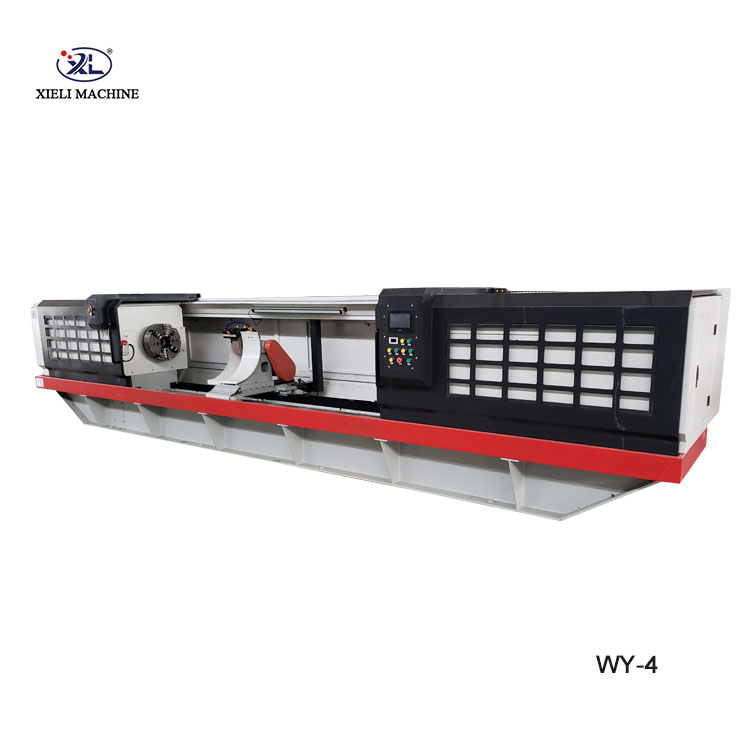
Achieving a mirror-like finish on hydraulic piston rods and roller shafts requires more than just standard grinding; it demands a precise synergy between abrasive media and machine stability. For industries dealing with electroplating processes, the transition between plating and final assembly often hinges on the ability to remove microscopic imperfections without compromising dimensional integrity. The WY series cylindrical polishing machine addresses this specific engineering challenge by providing a versatile platform that supports a wide array of polishing wheels, from PVA and nylon to wool and cloth.
By integrating PLC-driven human-machine interfaces, operators can achieve consistent surface roughness as low as Ra 0.02um. Whether the project involves small-diameter shafts or large-scale industrial rollers up to 600mm, the focus remains on reducing friction and enhancing the longevity of the workpiece. This equipment is designed to bridge the gap between raw machining and high-precision finishing, ensuring that every component meets rigorous hydraulic and pneumatic standards.
The Role of Precision Cylindrical Polishing in High-Pressure Hydraulic Systems
In the manufacture of pneumatic and hydraulic components, the surface quality of the piston rod is the primary determinant of seal life and system efficiency. Any residual scratches or unevenness after electroplating can lead to premature seal wear and fluid leakage. Cylindrical polishing serves as the critical final step, utilizing controlled abrasion to eliminate these defects. The WY series is engineered specifically for this purpose, offering the rigidity required to maintain concentricity over lengths up to 5 meters.
The operational logic relies on the interaction between the spindle speed and the X-direction travel speed. By fine-tuning the 0-200 r/min spindle rotation against a controlled feed rate, the machine ensures a uniform material removal rate across the entire length of the shaft. This prevents the formation of "bell-mouth" effects at the ends of the workpiece, which is a common failure point in lower-end polishing equipment.
- Surface Refinement: Achieving Ra 0.02um ensures minimal friction for high-speed reciprocating parts.
- Post-Plating Correction: Specifically designed to smooth out chrome or nickel plating imperfections.
- Dimensional Stability: High-load capacity chucks prevent workpiece deflection during the process.
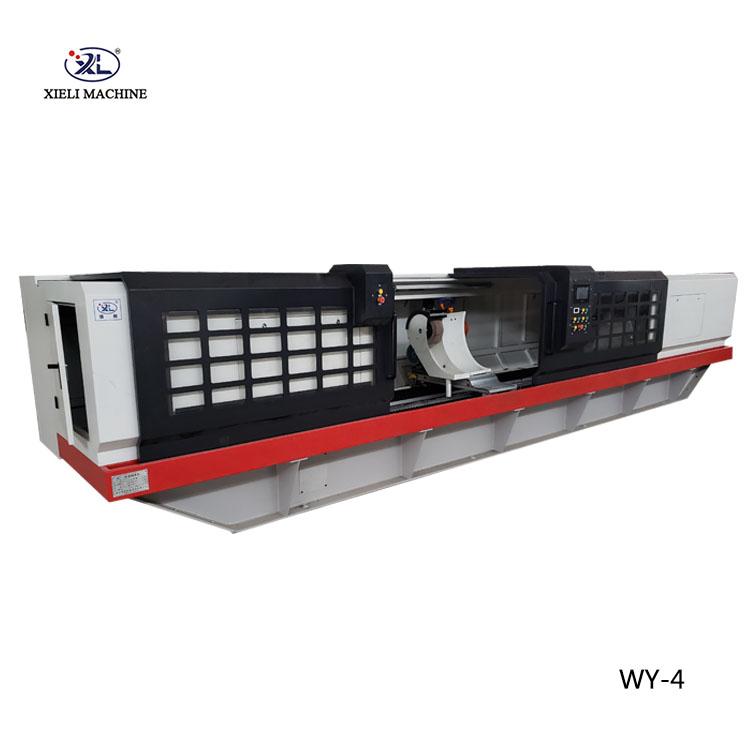
Technical Versatility through Modular Abrasive Integration
One of the most significant advantages of the WY series is its ability to adapt to different material hardnesses through interchangeable polishing wheels. Depending on the required finish and the material of the workpiece, operators can install various media. For instance, Chiba wheels are often used for aggressive stock removal, while wool or cloth wheels are reserved for the final mirror-glazing stage. PVA wheels provide a middle ground, offering excellent consistency for stainless steel and alloy shafts.
The integration of a PLC control system allows for "one-key operation," which significantly reduces the learning curve for new operators and ensures that the machining parameters are repeatable across different shifts. This digitization of the polishing process removes the guesswork associated with manual grinding, making it possible to maintain strict quality control across large production batches.
Furthermore, the inclusion of a dry fan dust removal system is not merely for cleanliness; it protects the machine's internal electronics and the operator's health by efficiently capturing abrasive particles. This makes the equipment suitable for long-term operation in high-volume manufacturing environments where air quality and machine uptime are critical.
Engineering Considerations for Customizing Finishing Equipment
Selecting the right polishing equipment requires a deep analysis of the workpiece dimensions and the desired surface topography. When requesting a customized centerless grinder or a cylindrical polisher, buyers must consider the maximum machining diameter and the required length. The WY series offers a standard range of 50mm to 600mm in diameter, but the flexibility of the design allows for modifications to accommodate specialized oversized rollers or ultra-fine micro-shafts.
Load weight is another critical factor. With a standard capacity of 1000kg, the machine can handle substantial steel components, but for extremely heavy industrial rollers, the frame and chuck can be reinforced. Buyers should also evaluate the input power requirements; the 13kw three-phase system is designed for industrial stability, ensuring that the polishing wheel maintains a constant 3000 r/min speed even under heavy load.
The choice of feeding mode—electric control for digital display—allows for precision in the X-axis movement. This ensures that the polishing head covers the entire surface area without skipping, which is essential for components that will be used in precision seals. By matching the machine's specifications to the actual part geometry, manufacturers can optimize cycle times and reduce waste.
Technical Specifications Comparison for WY Series
| Model Parameter | WY-2 | WY-3 | WY-4 | WY-5 |
|---|---|---|---|---|
| Machining Length (m) | 2 | 3 | 4 | 5 |
| Machining Diameter (mm) | 50-600 | 50-600 | 50-600 | 50-600 |
| Input Power (kw) | 13 | 13 | 13 | 13 |
| Total Weight (kg) | 2000 | 2800 | 3600 | 4400 |
| Overall Dimension (m) | 51.61.5 | 61.61.5 | 71.61.5 | 81.61.5 |
Evaluating Supplier Capabilities for Specialized Grinding Needs
When procuring high-precision machinery, the manufacturer's breadth of experience in the polishing and grinding industry is paramount. A supplier that specializes in multiple types of polishing—such as square pipe, hexagonal, and ball polishing—demonstrates a deeper understanding of abrasive physics. Xingtai Xieli Machinery Manufacturing Co., Ltd. leverages years of R&D to ensure that their equipment is not just a tool, but a solution tailored to the specific metallurgy of the workpiece.
Quality assurance in these machines is often found in the details: the precision of the spindle, the stability of the chuck, and the reliability of the PLC. A strong entity enterprise focuses on the after-sales service, recognizing that technical support for installation and calibration is where the real value is realized. For buyers in more than 20 provinces and various international regions, the ability to customize the load weight and diameter ensures the machine fits the existing production line perfectly.
Procurement managers should look for companies that adhere to a concept of excellent quality and first-class service. The ability to provide a variety of polishing wheel options (Nylon, PVA, Wool, etc.) indicates that the manufacturer understands the nuances of different surface finish requirements, allowing the buyer to optimize their process without needing multiple different machines for different materials.
Future Trends in Cylindrical Surface Finishing Technology
The industry is moving toward increased automation and tighter tolerance controls. We are seeing a shift where manual adjustments are being replaced by intelligent sensing systems that can detect surface roughness in real-time. While the current WY series provides a robust foundation with PLC controls, the next evolution involves integrating IoT capabilities to monitor wheel wear and automatically adjust feed speeds to maintain a constant Ra 0.02um finish.
Environmental sustainability is also becoming a key driver. The transition toward more efficient dust removal and the development of longer-lasting abrasive wheels are reducing the operational cost and environmental footprint of polishing shops. Manufacturers are now focusing on "green polishing," reducing the reliance on harsh chemical polishing agents by maximizing the mechanical efficiency of the polishing wheel.
For buyers, the trend is toward "modular procurement." Rather than buying a fixed-spec machine, the demand for customizable equipment—where the machining length and load capacity can be scaled—is increasing. This allows companies to start with a smaller model like the WY-2 and expand their capacity as their product line grows, ensuring a better return on investment.
Frequently Asked Questions about Cylindrical Polishing
What is the primary difference between cylindrical polishing and standard grinding?
Cylindrical polishing is generally used for final surface refinement and achieving mirror finishes (like Ra 0.02um), whereas grinding is used for removing larger amounts of material to reach a specific dimension. Polishing uses softer, specialized wheels (wool, nylon, PVA) to smooth the surface without significantly altering the diameter.
Which polishing wheel should I use for a chrome-plated hydraulic rod?
For chrome-plated rods, a combination is usually best: start with a PVA or nylon wheel for initial smoothing and finish with a wool or cloth wheel to achieve the final high-gloss, low-friction surface required for seals.
Can the WY series handle workpieces larger than 600mm?
While the standard machining diameter is 50-600mm, the equipment can be customized according to user requirements. You should contact the technical team to discuss specific diameter needs for specialized rollers.
How does the PLC control improve the polishing process?
The PLC allows for "one-key operation," meaning the speed, feed rate, and movement are programmed for consistency. This eliminates operator error and ensures that every piece in a production batch has the same surface finish.
What maintenance is required for the dry fan dust removal system?
The primary maintenance involves regular cleaning or replacement of the dust filters to ensure optimal airflow and to protect the motor from abrasive buildup.
Is it possible to customize the load weight for very heavy shafts?
Yes, the standard load weight is 1000kg, but this can be customized. The machine's structure and chuck can be reinforced to support heavier industrial workpieces based on your specific requirements.
Technical References and Industry Standards
- ISO Standards for Surface Roughness and Texture
- ASME B46.1: Surface Texture (Surface Roughness, Waviness, and Lay)
- NIST Guide to Precision Metrology and Surface Analysis
- AGMA Standards for Gear and Shaft Finishing
Selecting the right finishing equipment is a balance between technical specifications and application needs. Whether you require a standard WY series machine or a customized centerless grinder solution, focusing on surface roughness and structural rigidity will ensure the highest quality for your hydraulic and pneumatic components.
Related Finishing Solutions